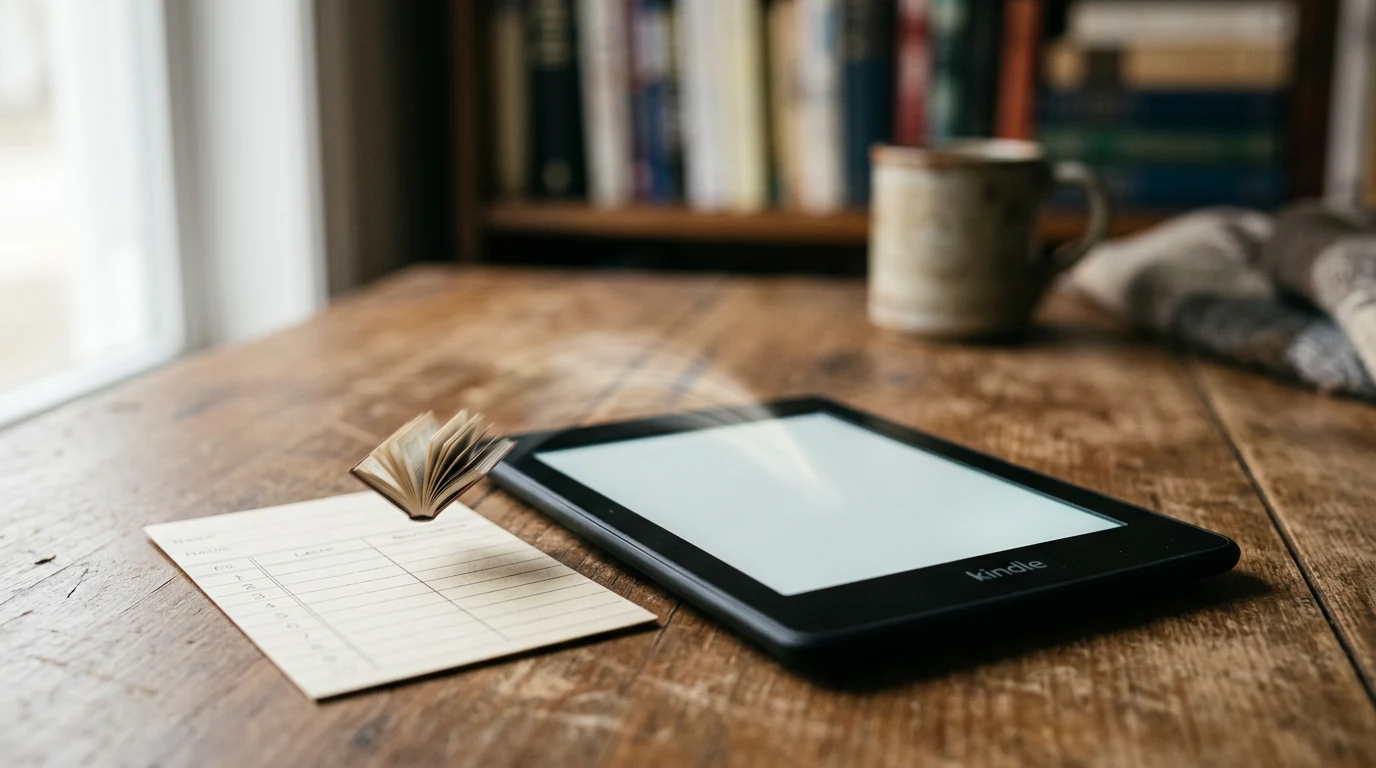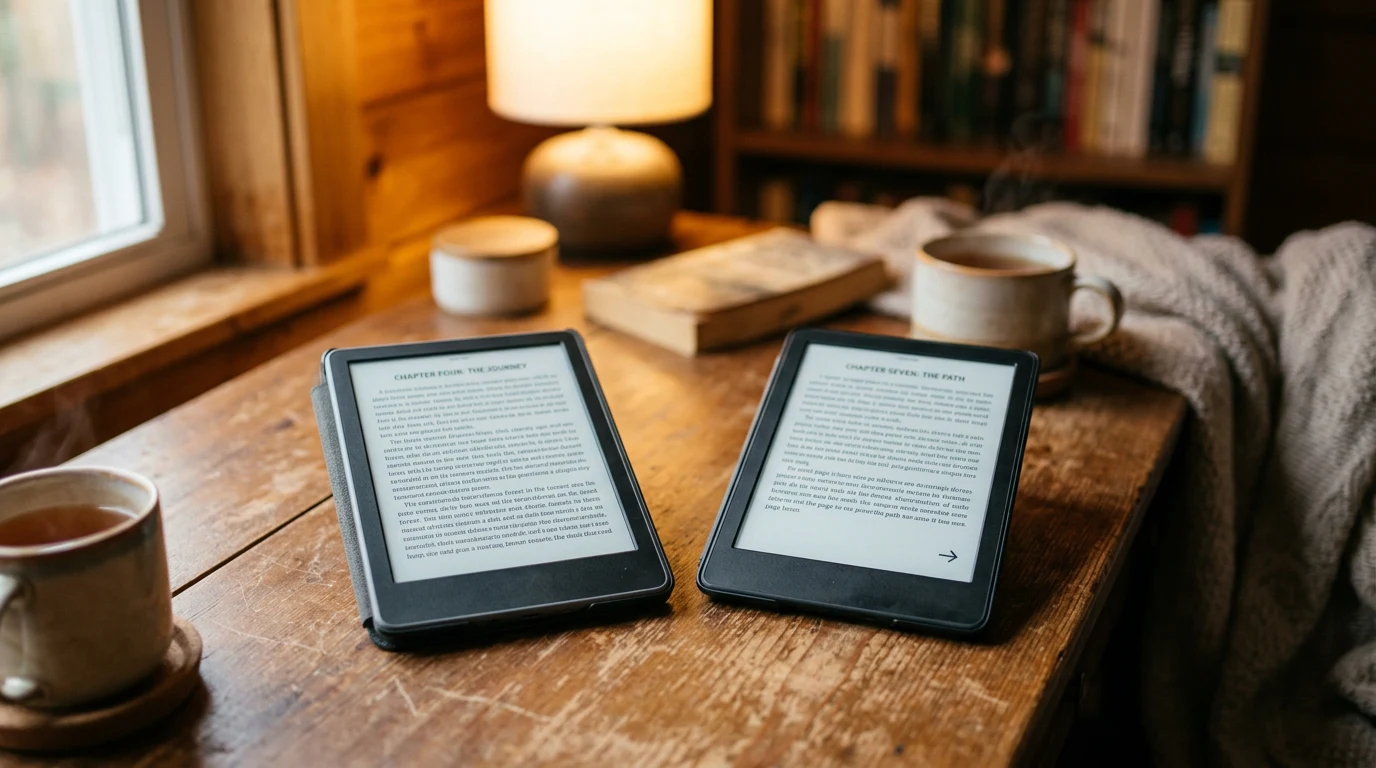
For pure reading, an e-reader wins — the pick is a Kindle Paperwhite ($159.99 listed, late 2025) or Kobo Clara BW ($129.99) for library-loan households: e-ink's matte page, weeks-long battery and front-lit night reading are documented advantages no tablet matches. The tablet wins only in mixed use — if the device doubles as a video player, notebook and browser, an iPad or Android tablet reads adequately and does everything else too. The catch: reading on an LCD tablet at night fights your sleep in a way e-ink doesn't, and a tablet's attention-grabbing home screen is one tap from every book.
What does the documentation say about eye comfort?
E-ink is reflective — ambient light bounces off it like paper, and makers including Amazon and Kobo document adjustable warm front-lights for dark rooms. Tablets are emissive — the screen is the light source — and their blue-heavy output is what nighttime-reading warnings target; tablet makers now ship night modes shifting color warmer, which helps but doesn't replicate the matte, flicker-free page. For hours-a-day readers, the documented comfort gap is real; for 20-minute readers, it rarely decides anything.
What about books themselves?
- Ecosystem lock: Kindles read Amazon's store natively; EPUB sideloading is documented but clunky. Kobos read EPUB natively and integrate OverDrive/Libby for free library loans — the documented killer feature for library users.
- Tablets read everything: every store's app plus library apps, PDFs, comics in color — the flexibility argument in one line.
- Pricing: e-books run $0–15 either way; the device choice changes where you buy, not what books cost.
Head-to-head on the documented numbers
| Kindle Paperwhite | Kobo Clara BW | Entry iPad / budget Android tablet | |
|---|---|---|---|
| Listed price (late 2025) | $159.99 | $129.99 | $349 / under $150 |
| Screen | 7" e-ink, warm light | 6" e-ink | 10–11" color LCD |
| Battery | Weeks (documented up to 12 weeks) | Weeks | About a day |
| Beyond reading | Nothing | Nothing | Everything |
| Library loans | Via Kindle store / Libby in US | Native OverDrive/Libby | All apps |
Which one for which reader?
- Heavy bedtime reader: e-reader, warm light at minimum — sleep quality is the documented, decisive difference.
- Library borrower (non-Amazon): Kobo's native Libby integration is the documented easiest path.
- Comics, magazines, PDFs, color: tablet, no contest — e-ink's slow refresh and grayscale lose here.
- One-device travelers: tablet, accepting the battery and night-reading trade-offs.
The verdict
On the documented evidence: an e-reader if reading is the activity (Paperwhite or Clara BW by ecosystem); a tablet if reading is one app among many. What the sources did not establish: e-ink making anyone read "better" — the honest differences are comfort, battery and distraction, not comprehension.