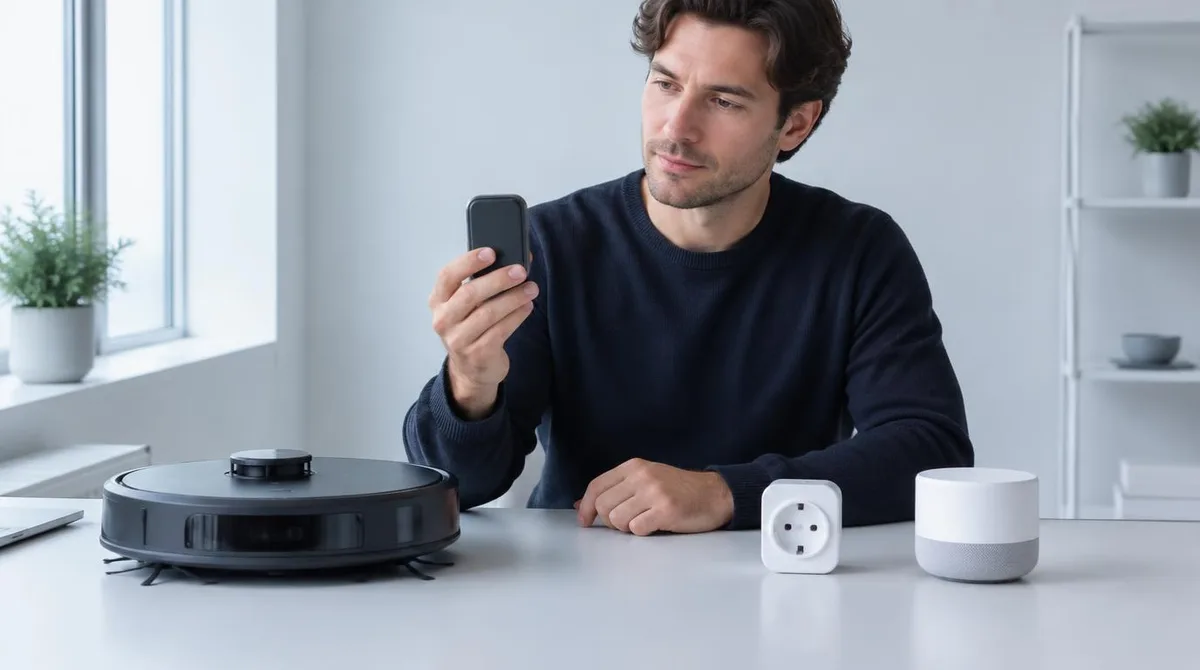
A gadget is a small mechanical or electronic device with a practical use — and usually a clever twist. A smart plug is a gadget. A robot vacuum is a gadget. A plain screwdriver, most people would agree, is not. The word carries a hint of novelty: a gadget does something useful, but it also does something a little unexpected.
Where the word came from is a genuinely open question. Dictionary etymologists treat the origin of "gadget" as unknown or uncertain, and no single origin story has won the argument. What is well documented is how the word spread: from niche slang in the late nineteenth century to everyday shorthand for portable tech today. This piece traces that shift, era by era, and explains why the boundaries of the word still wobble.
Before the history, one small grammar note, because the question in the title is itself a lesson. The auxiliary verb changes with the subject: as the ESL Teachers grammar guide explains, you use do with I, you, we and they, and does with he, she and it — so you ask "what does 'gadget' mean?" but "what do gadgets mean?". The verb after does also stays in its base form. That is the whole rule, and it is why the headline reads the way it does.
Where did the word 'gadget' come from?
The honest answer is: nobody knows for sure. The word surfaces in English in the second half of the nineteenth century, and reference works describe its origin as uncertain. Several candidate sources get repeated in etymology discussions — a French word for a gun's trigger mechanism, a sailor's term for a small tool or fitting whose proper name had been forgotten, and a possible link to the name Gatchet. None of these is confirmed, and serious dictionaries mark the trail as broken rather than pick a winner.
What the early uses do show is a consistent idea. A gadget was a small device whose name you did not know or did not need — a thing defined by its function rather than its formal title. That is still close to how people use the word now. When you call something a gadget, you are often saying: it is small, it does a job, and the exact category label does not matter much.
How did the meaning shift through the twentieth century?
As mass manufacturing grew, the word moved from workshop slang to consumer vocabulary. Mid-century writing used "gadget" for labor-saving kitchen devices, clever hand tools and novelty items — the sort of thing sold by mail-order catalogues and demonstrated at world's fairs. The tone was often slightly dismissive. A gadget was clever but not essential.
Then electronics changed the word's status. Transistor radios, pocket calculators, digital watches and early handheld games were all called gadgets, and each generation made the label more respectable. What had been a word for marginal conveniences became a word for genuinely new categories of technology. The dismissive edge softened; a gadget could now be the most interesting object in the room.
Our take: the word's meaning has always tracked whatever technology is small and new. The category is defined by novelty as much as by function, which is why the same device can stop being a gadget once it becomes ordinary. Nobody calls a television a gadget anymore. A smart speaker still qualifies, for now.
What counts as a gadget today?
In current consumer-tech usage, a gadget is typically a small electronic device designed for a personal practical task — often one that connects, automates or monitors something. Phones, earbuds, smartwatches, power banks, dash cams, robot vacuums and smart plugs all sit comfortably inside the word. So do more modest items: a phone mount for the car, a wireless charging pad, a mechanical keyboard.
The edges are fuzzy, and that is fine. Two tests help when you are unsure whether something deserves the label:
- Size and portability. Gadgets are usually small enough to hold, wear or mount. A full-size washing machine is an appliance; a portable power station sits somewhere in between and gets called a gadget when it travels.
- Novelty of function. A gadget does something in a way that feels new or clever, rather than being a plain tool for a plain job. A hammer is a tool. A laser measure is a gadget.
Marketing has also stretched the word. Anything small and electronic can be branded a gadget, useful or not. That is worth remembering when you shop: the label promises novelty, not quality. The way to separate the two is to read what the device actually does, which is the approach behind our guide to spotting everyday gadgets that genuinely make life easier. For related coverage, see Everyday Gadgets That Quietly Make Life Easier — and How to Spot Them.
Why does the word matter when you are buying?
It matters less than you would think — and that is the useful point. "Gadget" is a folk category, not a technical one. No standards body defines it, no certification requires it, and no spec sheet lists it. When a product page calls something a gadget, that word carries no measurable promise at all.
What carries promises is the documented detail: battery capacity, water-resistance ratings, charging wattage, sensor specs. Those come from manufacturer documents and independent tests, and they are what our Gadgets coverage is built on. A gadget's origin as a word for unnamed small devices is a reminder to look past the label and ask what, specifically, the thing does. This connects to our earlier piece, The Best Smart Plug for Most Homes, Per the Documented Specs.
Practical steps, then: ignore the category word on the box. Check the documented specs against your actual need. Check whether a subscription or hub is required. Check the return window. None of that depends on whether the item deserves to be called a gadget — and the item that does deserve the word is not automatically the better buy.
The bottom line on a word with no clear birthplace
"Gadget" began as slang for a small device whose proper name did not matter, survived a century of shifting technology, and now covers most of the portable electronics in your bag and home. Its origin is genuinely uncertain — the dictionaries say so, and the competing etymologies remain unproven. Its modern meaning, though, is stable enough: small, electronic, practical, and usually a little clever.
The word will keep moving as technology does. Today's gadget is tomorrow's appliance; the next category nobody has a name for will pick up the label instead. When it does, the same shopping rule applies: the name is trivia, the specs are the substance. Our Guides section applies that rule across the categories the word now covers, from charging gear to smart-home devices.