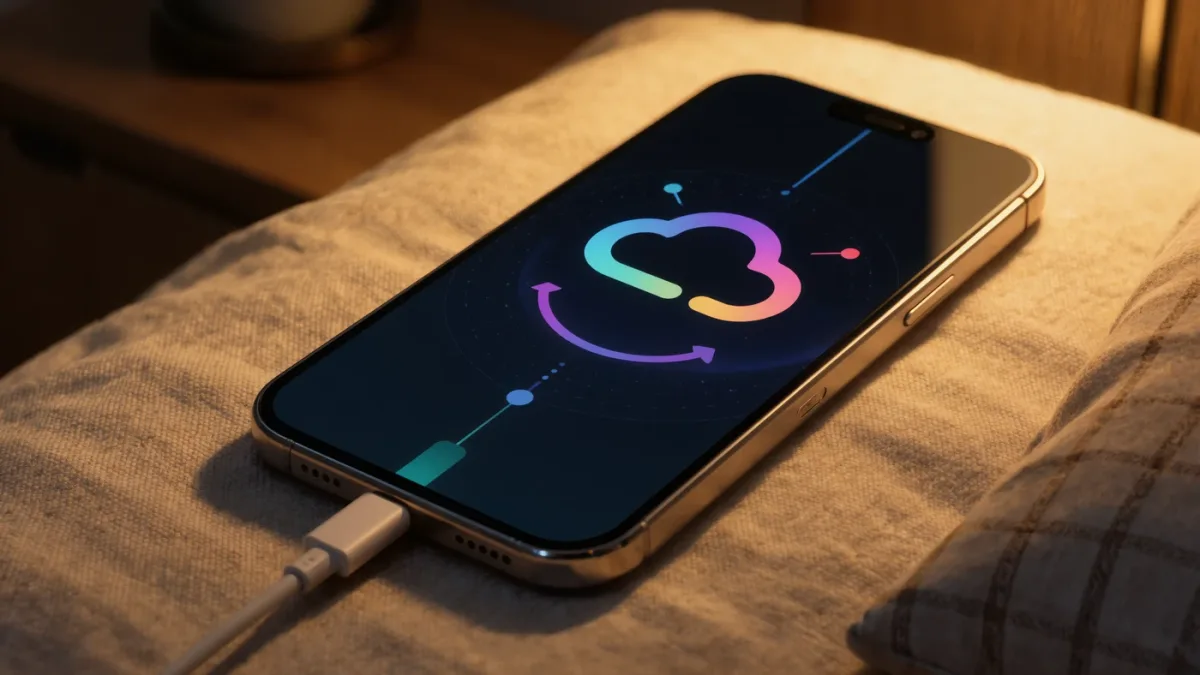
The right way is boring and automatic: iCloud Backup on iPhone (Settings → your name → iCloud → iCloud Backup), Google One backup on Android (Settings → Google → Backup) — both documented to run nightly on Wi-Fi while charging. The right way also includes verifying: check the "last backup" timestamp monthly, because a backup that silently stopped is worse than none. The catch: the documented gaps — two-factor authenticators, some health and banking data, and anything in app storage that developers exclude — need their own export or a second backup path.
What does each backup actually capture?
- Apple iCloud Backup documents: device settings, app data (per developer inclusion), photos via iCloud Photos if enabled, messages, ringtones, and the Home Screen layout. The free tier is 5GB — the documented choke point that pushes most users to iCloud+ ($0.99/month for 50GB).
- Google One backup documents: apps, app data, call history, contacts, device settings, SMS, photos via Google Photos. Google's free photo storage after June 2021 policies covers compressed-size photos on Pixels and photos backed up in "Storage saver" quality elsewhere — check your library's documented storage settings.
What's the correct setup sequence?
- Turn on automatic backup in the platform settings above; leave "back up over cellular" off unless your data plan is generous.
- Run a first backup manually and watch it complete — this surfaces storage-shortage errors immediately rather than in month four.
- Verify monthly: the "last successful backup" line is the documented source of truth; a phone that hasn't backed up in three weeks is telling you something (disabled toggle, full storage, no overnight Wi-Fi).
- Test-restore once: the documented proof — restore to a replacement or after a factory reset before you rely on it. Backups that have never restored are hopes, not backups.
What do backups miss?
- Authenticator apps: most need in-app export/enrollment on the new device — do it before you lose the phone, not after.
- WhatsApp and similar: their own documented backup flows ( iCloud or Google Drive) — confirm chat backup is on inside those apps.
- Music and files stored locally: cloud backup of a phone doesn't document arbitrary files living outside the photo library; move them to a cloud drive deliberately.
- Two SIM/eSIM specifics: carriers document eSIM transfer flows — a backup doesn't move an eSIM by itself.
Is the cloud backup enough?
For most people, yes — phone loss becomes an inconvenience instead of a catastrophe. The documented best practice for irreplaceable photos is 3-2-1 thinking (three copies, two media, one offsite): the cloud is one copy; a periodic computer copy is the second. For everyone else: automatic on, verified monthly, tested once. That's the right way.