
A media plan works when three things are true: it's written, it was negotiated with the kids, and the devices enforce it — screen-time controls do the refusing so you don't have to. The structure pediatric guidance recommends: consistent zones (bedrooms and meals device-free), consistent times (homework-first, a hard overnight off), and content rules matched to age. The catch: every expert's guidance includes the part parents skip — you follow the plan too, or it's not a family plan, it's surveillance.
What goes in the plan?
- Zones: devices sleep outside bedrooms — the single most-documented rule in pediatric sleep guidance; charge phones in the kitchen.
- Times: define when screens are available, not just when they're banned; kids follow "4–5pm, free choice" better than "not too much."
- Content tiers by age: what needs a parent, what's solo-allowed, what's family-only time.
- Consequences, stated in advance: the plan documents what happens on violation — losing the dispute is the deterrent, not improvising punishments.
- The parental clause: parents' own phone habits during meals and bedtime — negotiated, written, enforced.
What settings enforce it?
- Apple Family Sharing + Screen Time: documents per-app time limits, downtime windows (devices lock except allowed apps and calls), and communication limits; approval-required downloads.
- Google Family Link: documents the same toolkit on Android — app limits, bedtime locks, and requiring approval for Play Store purchases.
- Router-level controls: many routers document per-device schedules cutting Wi-Fi at set times — the layer kids can't reach from inside the device.
Settings make rules boring to argue with; keep the plan itself as the thing you renegotiate together — seasonally works, the documented rhythm as school schedules change.
How do you get buy-in rather than compliance?
- Negotiate the plan, enforce the physics: kids help write it (they'll propose stricter overnight rules than you expect, a documented surprise of the exercise); settings just hold the line.
- Revisit on a schedule: birthdays and school-year transitions are the documented renegotiation points — plans that never flex get broken quietly.
- Watch the workaround economy: passcodes get shared, friend devices appear. The answer documented across parental-control guidance is conversation plus layered controls, not escalation alone.
What about the numbers — how much is too much?
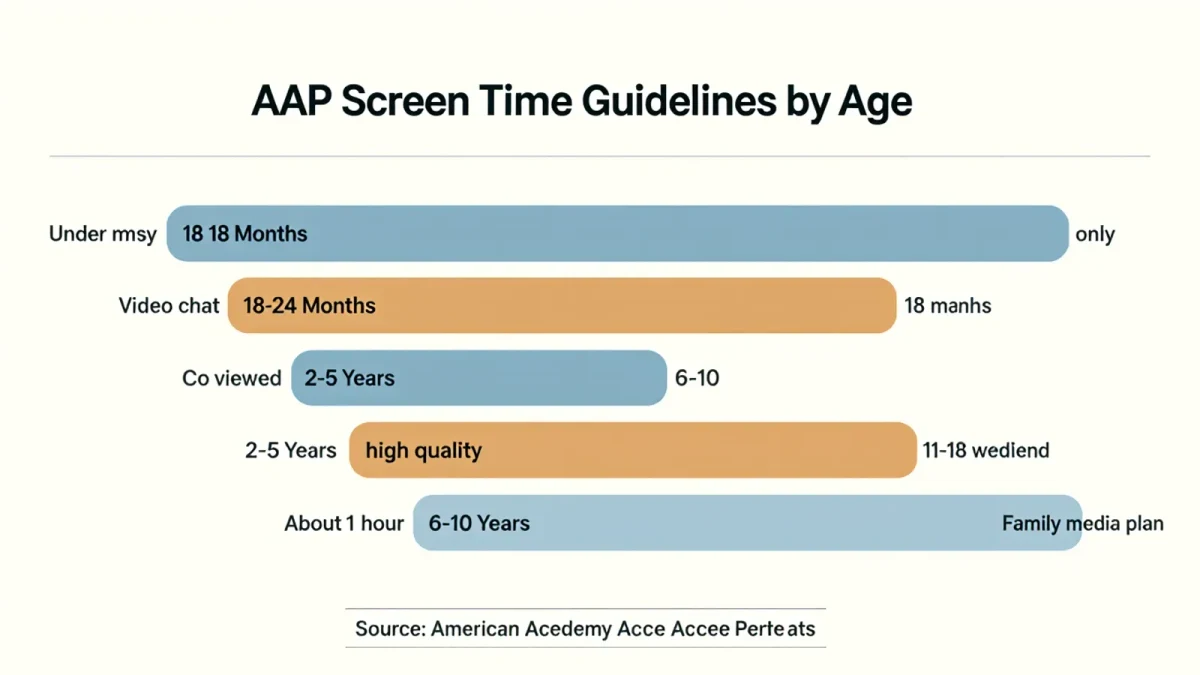
Honest answer: guidance varies and quality beats quantity — the American Academy of Pediatrics' family media plan tool (the reference most pediatricians document) emphasizes content, context and co-viewing over a universal hour-count. For under-2s, guidance is consistent: video calls fine, other screens minimal. For school-age kids, the plan's structure matters more than any magic total.
The verdict
Write it together, enforce it with settings, revisit it twice a year, follow it yourself. What no guidance establishes: a screen-time number that fixes everything — the plan that works is the one your household actually wrote.