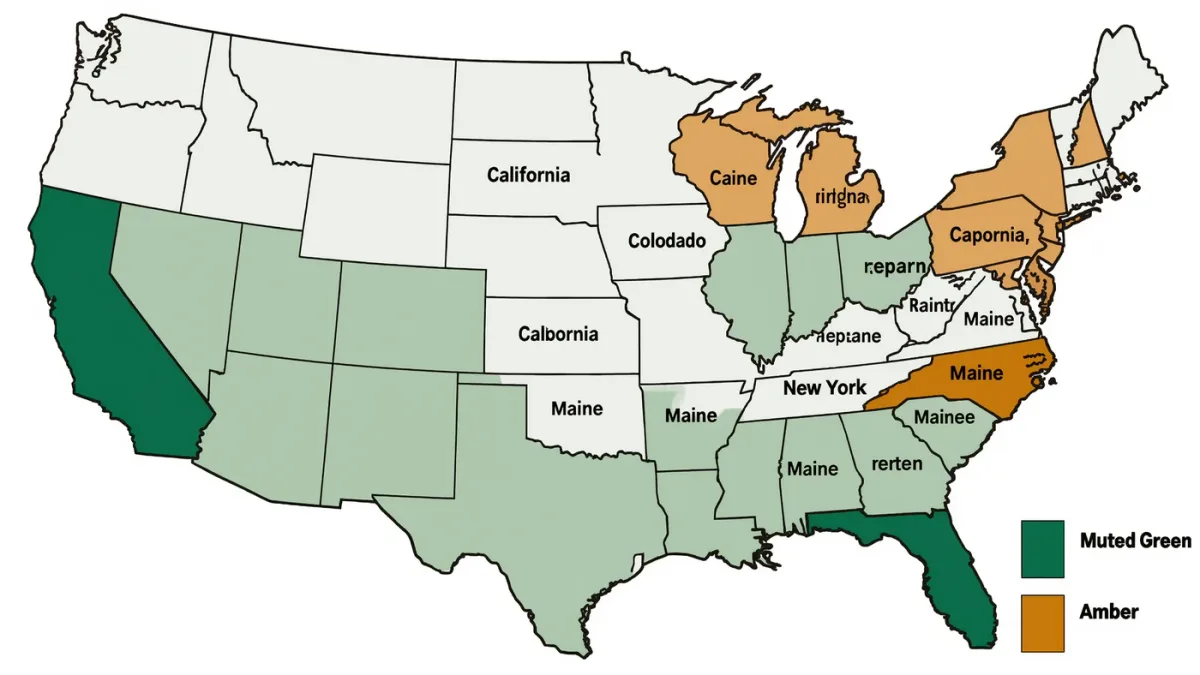
If your phone screen cracks in 2026, the law is increasingly on your side: more than a dozen states have passed right-to-repair laws since New York's first electronics statute, with California's (effective July 1, 2024) and Oregon's (effective January 1, 2025) setting the modern template — manufacturers must sell parts, tools and documentation to independent shops and owners on fair terms. The catch: coverage depends on your state, the product category, and who counts as an "authorized" repairer.
What do these laws actually require?
The documented common core across California (SB 244), Oregon (SB 1596), Minnesota and New York statutes: for electronics sold after the effective dates, makers must make diagnostic tools, parts and repair documentation available to independent repair providers and, in several laws, to product owners, on terms no worse than those offered to authorized service networks. Oregon's law goes further with the first documented ban on "parts pairing" — the software practice of refusing to recognize a replacement component unless the manufacturer authenticates it.
What changed in practice?
- Apple launched its Self Service Repair store in 2022 and expanded it — the documented response to repair pressure, offering parts, tools and manuals to consumers for iPhone and Mac, with trade-in credit for returned cores.
- Samsung partnered with iFixit on documented self-repair programs for Galaxy phones and tablets, later bringing the program in-house in 2025.
- The FTC turned Nixing the Fix into enforcement posture — the commission's reports and rulemaking activity document increased scrutiny of repair restrictions as anticompetitive.
What's the overlooked detail?
Parts pairing. Oregon's 2025 ban is the first to name it, and Apple — historically the heaviest user of pairing checks — documented software changes allowing used genuine parts to be paired at home on recent iPhones. That single shift makes third-party and secondhand-part repairs practical in a way raw parts availability never did; watch which states copy Oregon's language, because that's where the next practical improvement comes from.
What isn't covered?
The honest gaps: farm equipment and medical devices have separate statutes in some states; game consoles and HVAC have carve-outs in several laws; and warranty-void-if-repaired stickers remain legally toothless in the US under the Magnuson-Moss Warranty Act (the FTC documents that tie-in provisions generally can't void your warranty) — but enforcement is complaint-driven, not automatic.
What should you do with a broken gadget in 2026?
- Check whether your state has an electronics right-to-repair law (California, Oregon, Minnesota, New York, Colorado and a growing list).
- For recent Apple and Samsung devices, look at the makers' own self-repair stores before assuming a shop is your only option.
- Keep warranty claims honest: third-party repair generally cannot void your warranty outright, but damage caused by a botched repair can be excluded — document everything.