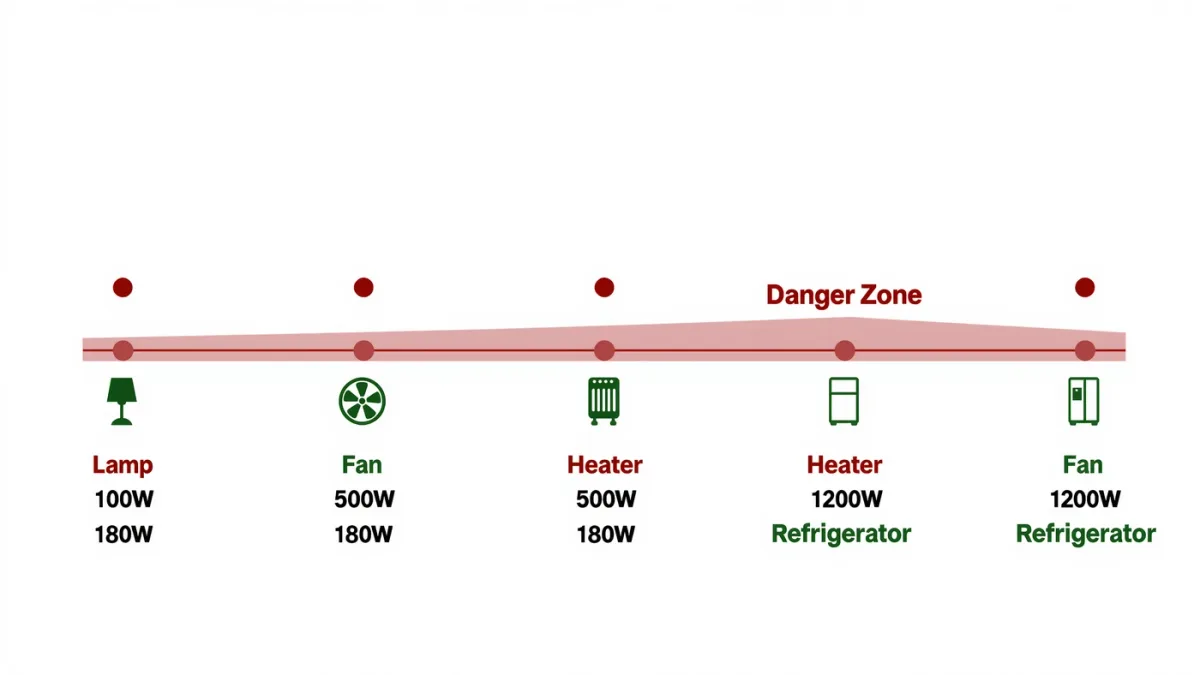
The number on the label decides everything: most smart plugs document 15A/1800W maximum resistive load — the ceiling of a standard US outlet circuit. Under it: lamps, fans, chargers, TVs, humidifiers, Christmas lights. Over or wrong-type: space heaters (a documented fire pattern when plugged through anything), hair dryers, and — different problem — refrigerators and air conditioners, whose compressors demand relay ratings most plugs don't document. The catch: exceeding the rating doesn't trip an alarm; it heats the relay silently, the documented failure mode behind smart-plug melt photos.
Blog Daily publishes information, not electrical advice — ratings below come from manufacturer documentation and UL listing requirements; anything beyond a lamp-class device on a smart plug deserves an electrician's opinion.
The documented categories
| Appliance | Typical draw | Smart plug verdict |
|---|---|---|
| Lamps, fans, chargers | <150W | Perfect — the designed use |
| TV, router, humidifier | 30–300W | Fine; consider energy-monitoring plugs |
| Coffee maker (resistive) | 600–1200W | Usually within rating; check the plate |
| Space heater | 1500W+ | Never — continuous max load through a relay; documented fire pattern |
| Hair dryer / kettle | 1200–1875W | No — brief but at/over the ceiling |
| Refrigerator / AC compressor | Surge 3–10x running amps | Only heavy-duty plugs documenting motor/inductive ratings (20A class, e.g. purpose-built heavy-duty models) |
| Washer / EV charger | Circuit-dependent | No — dedicated circuits, not smart plugs |
What does "inductive load" mean here?
Resistive loads (heating elements, lights) draw steady current. Motors and compressors draw a documented startup surge several times their running draw, and their coils produce kickback when switching off — both stress the plug's relay beyond its resistive rating. Plugs that document "motor load" or "TUV/UL rated for HP" listings exist specifically for this; a generic 15A plug on a garage-door opener or fridge is a documented gamble even when the running watts seem to fit.
What are the safer alternatives for heavy appliances?
- Heavy-duty smart plugs (documented 20A / 240V / motor ratings) for specific qualified loads.
- Smart relays wired by an electrician — the Shelly/Matter relay class documents direct-wire control for water heaters and AC, installed inside the appliance's circuit.
- Energy-monitoring plugs for insight instead of control: measuring a fridge's draw documents whether it's the lamp or a dying compressor — useful even when you don't switch it.
What else belongs in the safe-use list?
- Indoor plugs stay indoors — outdoor smart plugs document weather-resistant enclosures; indoor units corrode and short.
- One plug, one appliance — power strips through smart plugs multiply loads and violate the documented single-device intent.
- UL/ETL listing check — unlisted plugs document nothing; the certification mark is the floor.
The verdict
Lamp-class loads: any reputable smart plug. Heating and motors: check the plate, then the plug's documented ratings, and when the numbers are close — don't. What the sources did not establish: any safe way to run a space heater through a relay; that category documents its own answer.